How to Hire an HVAC Professional: Complete Homeowner's Guide
Keep Your Home Comfortable Without Overpaying
Your heating and air conditioning system is one of the biggest investments in your home. Whether your AC just died in a heat wave, your furnace is making weird noises, or you're planning a system replacement, finding the right HVAC professional makes all the difference. In this guide, you'll learn exactly how to hire with confidence—from understanding fair pricing to spotting red flags that could cost you thousands.
At a Glance: HVAC Hiring Essentials
| 💰 Typical Cost | ⏱️ Timeline | 📋 License Required | 🚩 Red Flags |
|---|---|---|---|
| $150-$12,000+ | Same-day to 2 weeks | Yes (all states) | 8 to watch for |
Note: Repair costs range from $150-$600. New system installations run $3,500-$12,000+. Emergency service costs 1.5-2x normal rates.
Why Choosing the Right HVAC Pro Is Critical
An improperly installed or repaired HVAC system can waste hundreds of dollars annually in energy costs and fail years before it should. Worse, poor installation can create safety hazards like carbon monoxide leaks or electrical fires. But hire the right professional, and you'll enjoy:
- Lower energy bills (proper sizing and installation can cut costs 20-40%)
- Longer equipment life (15-20 years instead of 8-10)
- Consistent comfort (no more rooms that are too hot or too cold)
- Peace of mind (knowing everything is safe and up to code)
The few hours you spend vetting HVAC contractors will save you thousands of dollars and years of frustration.
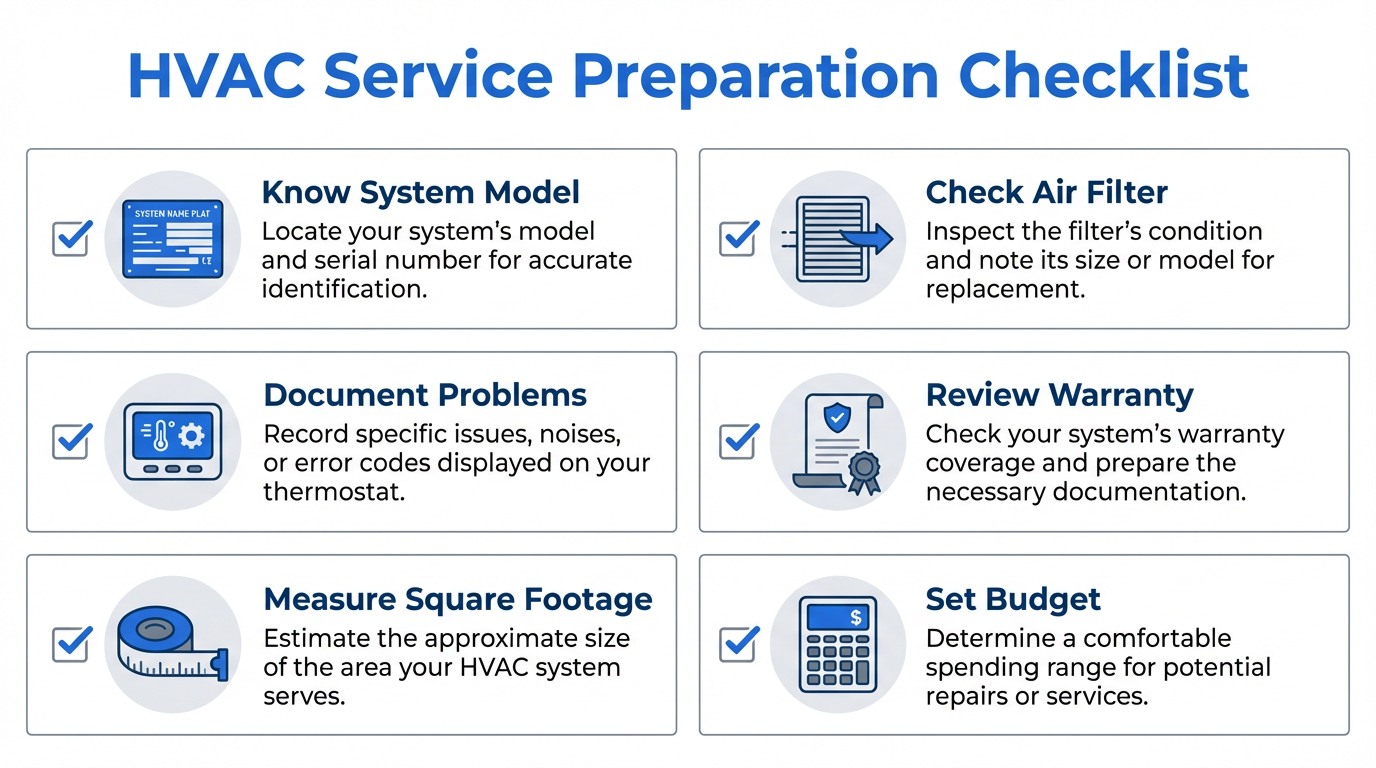
Before You Start – Your Pre-Search Checklist
Before you start contacting HVAC companies, take a few minutes to:
-
Know your system's age and model number
Why this matters: Helps technicians diagnose issues and quote accurately. Check the metal plate on your outdoor unit or furnace. -
Document the problem clearly
Why this matters: "Not cooling well" is vague. "Second floor stays 8 degrees warmer than first floor" is specific. Take photos of error codes. -
Check your air filter
Why this matters: A clogged filter causes 90% of "emergency" calls. Replace it first—it might solve your problem for $15. -
Review your warranty status
Why this matters: Equipment warranties (5-10 years) or recent installations (1-2 year labor warranties) might cover repairs. -
Measure your home's square footage
Why this matters: For new installations, proper sizing is critical. Too small = won't cool. Too big = wastes energy and creates humidity problems. -
Set your budget range
Why this matters: HVAC costs vary wildly. Knowing your budget helps filter realistic options quickly.
Step-by-Step: How to Find Qualified HVAC Professionals
Step 1: Start with Referrals (But Don't Stop There)
Ask around, but remember: your neighbor's needs might differ from yours.
- Ask friends and family who've had HVAC work done in the last 2-3 years
- Check local Facebook groups and Nextdoor (but verify independently)
- Ask your home inspector or real estate agent for recommendations
What to ask when you get a referral:
- "Was this a repair or a full installation?"
- "Did they explain everything clearly?"
- "Were there any unexpected charges?"
- "How's the system performing six months later?"
Step 2: Use Online Directories
Platforms like Pros We Love make comparison shopping easier:
- See multiple reviews from verified customers
- Compare specialties (some focus on repairs, others on new installations)
- Check response times (crucial for emergency situations)
- Filter by service area (not all HVAC companies travel far)
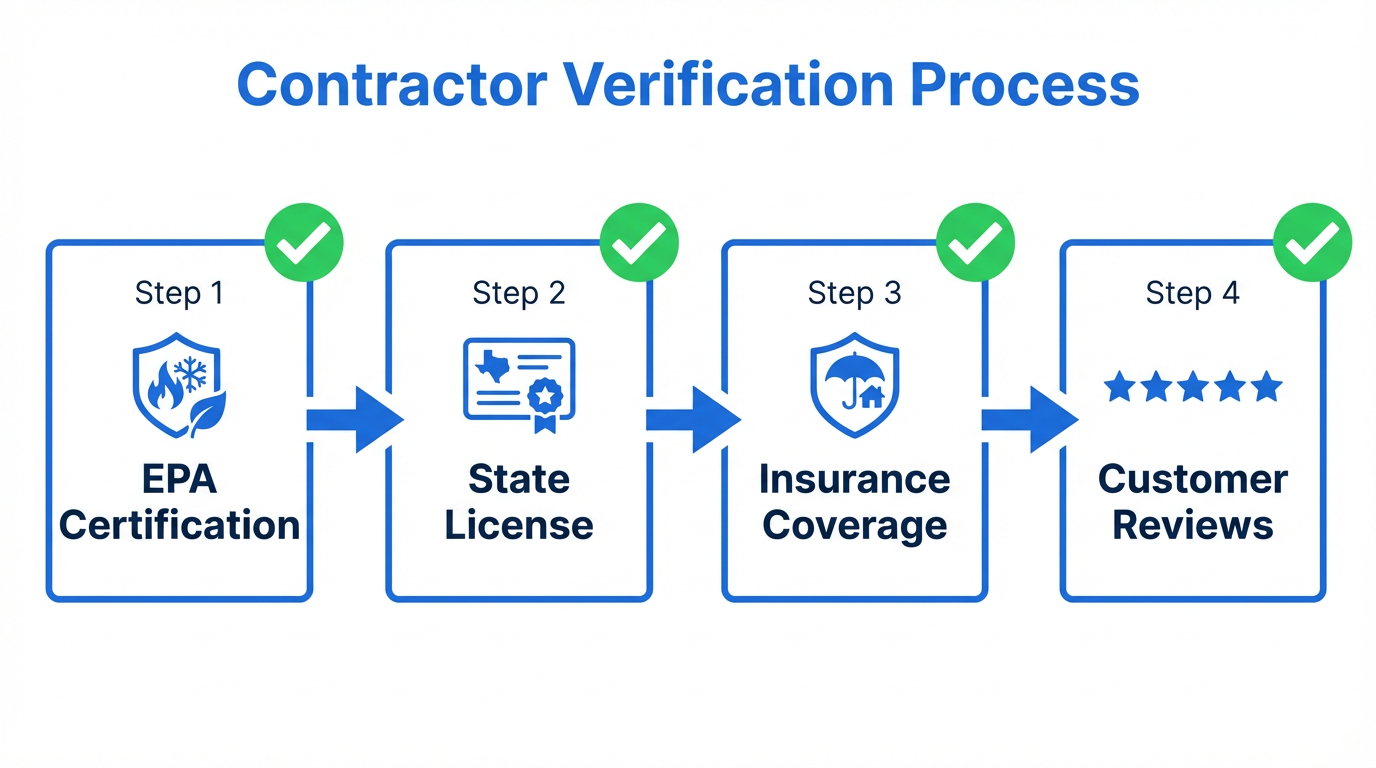
Step 3: Verify Credentials (Non-Negotiable)
HVAC work involves refrigerants, electrical systems, and gas lines. Licensing isn't optional.
- EPA Certification: Required to handle refrigerants (Section 608 for residential)
- State License: Every state requires HVAC contractors to be licensed
- Liability Insurance: Protects your property if something goes wrong
- Workers' Comp: Protects you from liability if a technician is injured
How to verify:
- Ask for their license number and EPA card
- Look them up on your state's contractor board website
- Call their insurance company directly to confirm active coverage
- Check BBB.org for complaints and ratings
🚩 8 Red Flags to Watch Out For
Be very cautious if an HVAC contractor:
-
🚩 Recommends a system size without performing a load calculation
Why this matters: Proper sizing requires measuring your home, insulation, windows, etc. Guessing leads to inefficient systems.
What to do: Ask to see the Manual J load calculation. It's industry standard and should be included in quotes for new systems. -
🚩 Pushes the "biggest system possible" to cool faster
Why this matters: Oversized AC units cycle on/off constantly, waste energy, don't dehumidify properly, and die sooner.
What to do: Run from contractors who say "bigger is better." Proper sizing is based on calculations, not guesswork. -
🚩 Offers a quote over the phone without inspecting
Why this matters: Every home is different. Accurate quotes require in-person evaluation of ductwork, electrical panels, and existing systems.
What to do: Only consider quotes after a thorough on-site assessment. -
🚩 Can't explain the SEER rating or efficiency details
Why this matters: SEER (Seasonal Energy Efficiency Ratio) directly impacts your energy bills. A knowledgeable tech should explain trade-offs.
What to do: Ask about SEER ratings, energy savings, and rebate eligibility. If they can't answer, find someone who can. -
🚩 Insists on only one brand and dismisses all others
Why this matters: Good contractors work with 2-3 quality brands to match your budget and needs. Brand loyalty suggests kickbacks or limited expertise.
What to do: Ask why they prefer that brand and if there are alternatives in your price range. -
🚩 Offers a "special deal" that expires today
Why this matters: High-pressure sales tactics are common in HVAC. Legitimate companies don't need to rush you.
What to do: Walk away. Real deals last longer than one day. -
🚩 Won't provide references or show past work
Why this matters: A contractor with satisfied customers is eager to share references. Reluctance means problems.
What to do: Ask for 3 recent references (within 6 months) and actually call them. -
🚩 Suggests skipping permits or inspections
Why this matters: Permits ensure code compliance. Skipping them can void warranties, affect home sales, and create safety hazards.
What to do: Always get required permits. Ask who will pull them (usually the contractor).

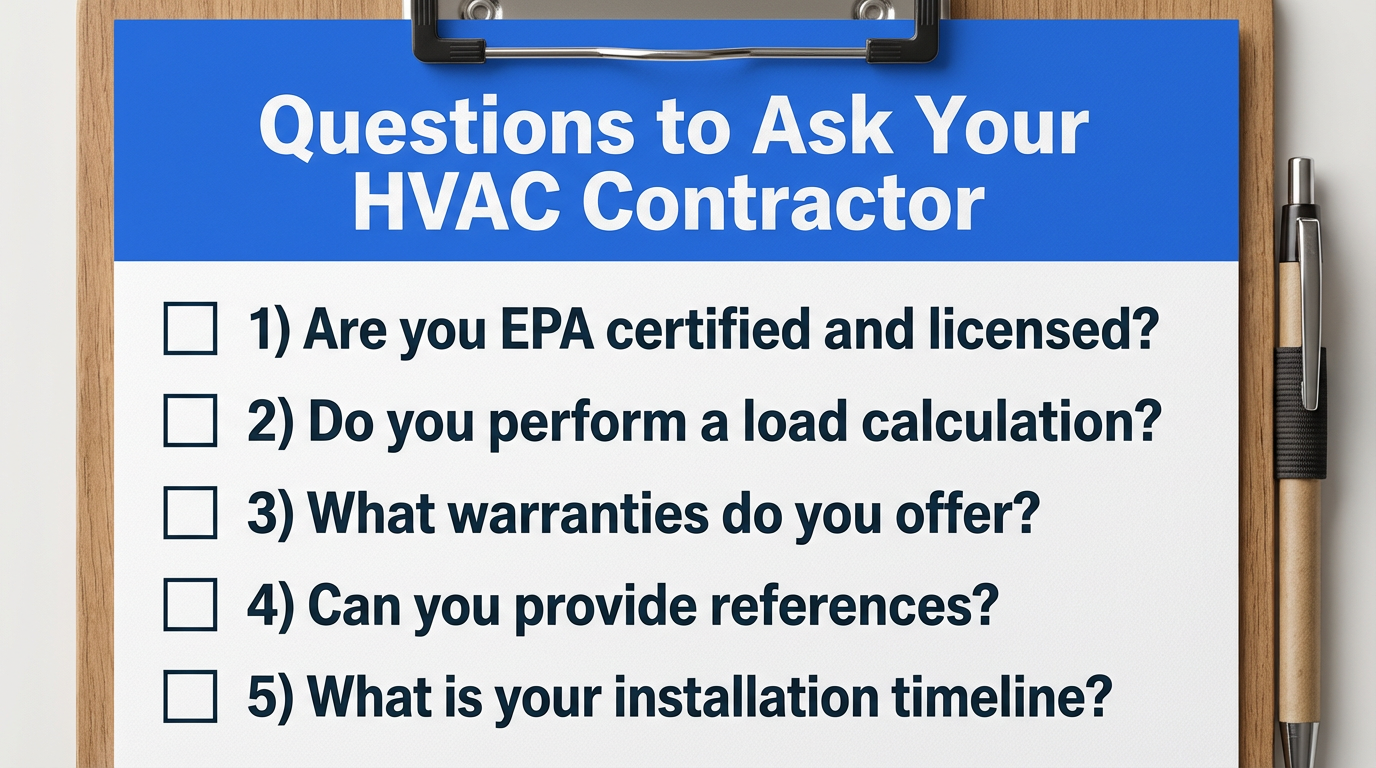
The Essential Questions: What to Ask Every HVAC Pro
Copy these questions and take notes during each consultation:
About Their Business
- How long have you been in business?
- Are you licensed, EPA-certified, and insured? Can I see documentation?
- What brands do you typically work with?
- Are you manufacturer-certified for installations?
- Can you provide 3 references from jobs completed in the last 6 months?
About This Specific Job
- What do you think is causing the problem? (For repairs)
- Will you perform a Manual J load calculation? (For new systems)
- What system size (tonnage) do you recommend and why?
- What SEER rating options are available in my budget?
- Are there any rebates or tax credits I should know about?
- What's your recommended solution? Are there alternatives?
- Will this require ductwork modifications?
- What's your estimated timeline from start to finish?
About Pricing & Process
- Can you provide a detailed written estimate with equipment model numbers?
- What's included? (Removal of old equipment, disposal, duct work, thermostat, startup, etc.)
- What's NOT included?
- What's your payment schedule?
- What warranties come with the equipment? What about labor?
- Will you pull all necessary permits and schedule inspections?
- What happens if you find additional issues (like leaky ducts or electrical problems)?
About Equipment Options
- What are the differences between the models you're quoting?
- How much will a higher SEER rating save me annually?
- Do you recommend any add-ons? (UV lights, better filters, zoning, etc.)
- What maintenance will I need to do? How often?
💡 Pro Tip: Be wary of contractors who rush through these questions or make you feel bad for asking. A good HVAC professional wants you to understand your investment and make an informed decision.
HVAC Cost Guide: What You Should Expect to Pay
HVAC costs depend on system type, size, efficiency rating, and installation complexity. Here's what to expect:
Typical Price Ranges
| Service Type | Low End | Average | High End | Timeline |
|---|---|---|---|---|
| Repair (minor) | $150 | $350 | $600 | Same day |
| Repair (major - compressor, blower) | $600 | $1,200 | $2,500 | 1-3 days |
| AC replacement (standard efficiency) | $3,500 | $5,500 | $7,500 | 1-2 days |
| AC replacement (high efficiency) | $6,000 | $9,000 | $12,000+ | 2-3 days |
| Furnace replacement | $2,500 | $4,500 | $8,000 | 1-2 days |
| Full system replacement (AC + furnace) | $6,000 | $10,000 | $15,000+ | 3-5 days |
| Ductwork replacement/modification | $2,000 | $5,000 | $10,000+ | 3-7 days |
Prices vary by region, home size, and equipment brand. These are national averages.
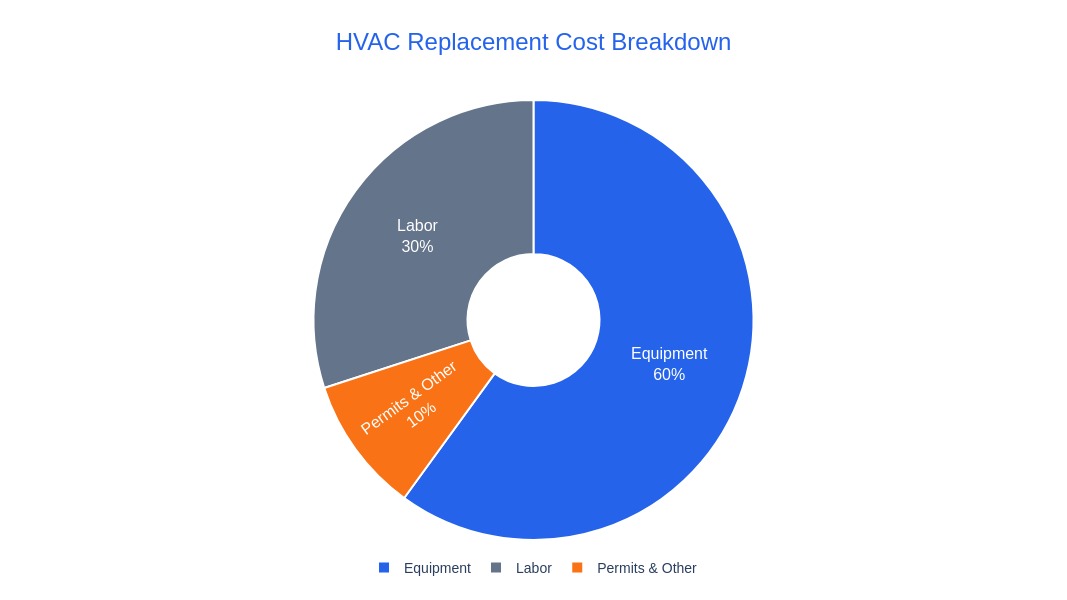
What Affects the Cost?
System Size (Tonnage)
Bigger homes need bigger systems. A 1,500 sq ft home might need a 2-ton unit ($4,000), while a 3,000 sq ft home needs 4-5 tons ($7,000+). BUT size must be calculated properly—oversizing wastes money and creates problems.
Efficiency Rating (SEER)
Higher SEER = lower energy bills but higher upfront cost. A 14 SEER system might cost $5,000, while a 20 SEER costs $8,000. The difference? You save $300-500/year in energy. It takes 6-10 years to recoup the investment, but you also get better comfort and a longer-lasting system.
Labor and Installation Complexity
Replacing an existing system in an accessible attic: straightforward. Installing AC in an old home with no ductwork: expensive. Factors that increase cost:
- Two-story homes (harder access)
- Attic installations (tight spaces, extreme temperatures)
- Ductwork modifications needed
- Electrical panel upgrades required
- Difficult outdoor unit placement
Brand and Features
Budget brands (Goodman, Ameristar): $3,500-5,500
Mid-tier (Carrier, Trane, Rheem): $5,000-8,000
Premium (Lennox, Daikin): $7,000-12,000+
All work fine if installed correctly. Pay for features you'll use (programmable thermostats, zoning) but don't overpay for brand name alone.
Financing and Rebates
0% Financing: Many contractors offer it, but read the fine print. Some add hidden fees or jack up the base price. Compare the financed price to cash quotes.
Rebates and Tax Credits:
- Federal tax credits: Up to $2,000 for high-efficiency systems (check current year eligibility)
- Utility rebates: $100-1,500 depending on your provider
- State rebates: Vary widely
Ask contractors to help you navigate rebate paperwork—it can shave 10-20% off your total cost.
Warning Signs in Pricing
Too Low (40%+ below market):
- They're using low-quality equipment
- They're skipping permits or cutting corners
- They're uninsured or inexperienced
Too High (50%+ above market):
- You're paying for flashy trucks and Super Bowl ads, not quality
- They assume you won't get other quotes
- Get 3-5 quotes to establish fair market rate
Just Right: Most quotes should cluster within 20-30% of each other for the same equipment and scope. Outliers deserve scrutiny.
How to Choose: Your Decision-Making Framework
The 5-Point Evaluation System
Rate each HVAC contractor (1-5 scale, 5 = excellent):
| Contractor | Credentials | Experience | Communication | Price & Value | Gut Feeling | Total |
|---|---|---|---|---|---|---|
| Company A | ___ | ___ | ___ | ___ | ___ | ___ / 25 |
| Company B | ___ | ___ | ___ | ___ | ___ | ___ / 25 |
| Company C | ___ | ___ | ___ | ___ | ___ | ___ / 25 |
Credentials (Non-Negotiable):
- 5 = Licensed, EPA-certified, insured, manufacturer-certified
- 1 = Missing ANY of the above (automatic disqualifier)
Experience:
- 5 = 10+ years, specializes in residential, excellent reviews
- 3 = 3-5 years, decent track record
- 1 = Brand new or can't provide references
Communication:
- 5 = Explains clearly, patient, responsive, on time
- 3 = Adequate but occasionally slow
- 1 = Pushy, dismissive, or hard to reach
Price & Value:
- 5 = Fair price with detailed quote, good warranty
- 3 = Okay price but vague quote
- 1 = Suspiciously cheap or unjustifiably expensive
Gut Feeling:
- 5 = Completely trust them
- 3 = Neutral, no red flags
- 1 = Something feels off
💡 A score of 20+ indicates a good choice. Don't just pick the cheapest—you want quality and reliability.
What to Expect: During an HVAC Project
Before Work Begins
Get a detailed contract with:
- Equipment brand, model, and SEER rating
- Scope of work (removal, installation, ductwork, electrical, etc.)
- Start and completion dates
- Total cost breakdown (equipment, labor, permits)
- Payment schedule (30% upfront max, balance on completion)
- Warranties (equipment AND labor)
- Permits and inspection schedule
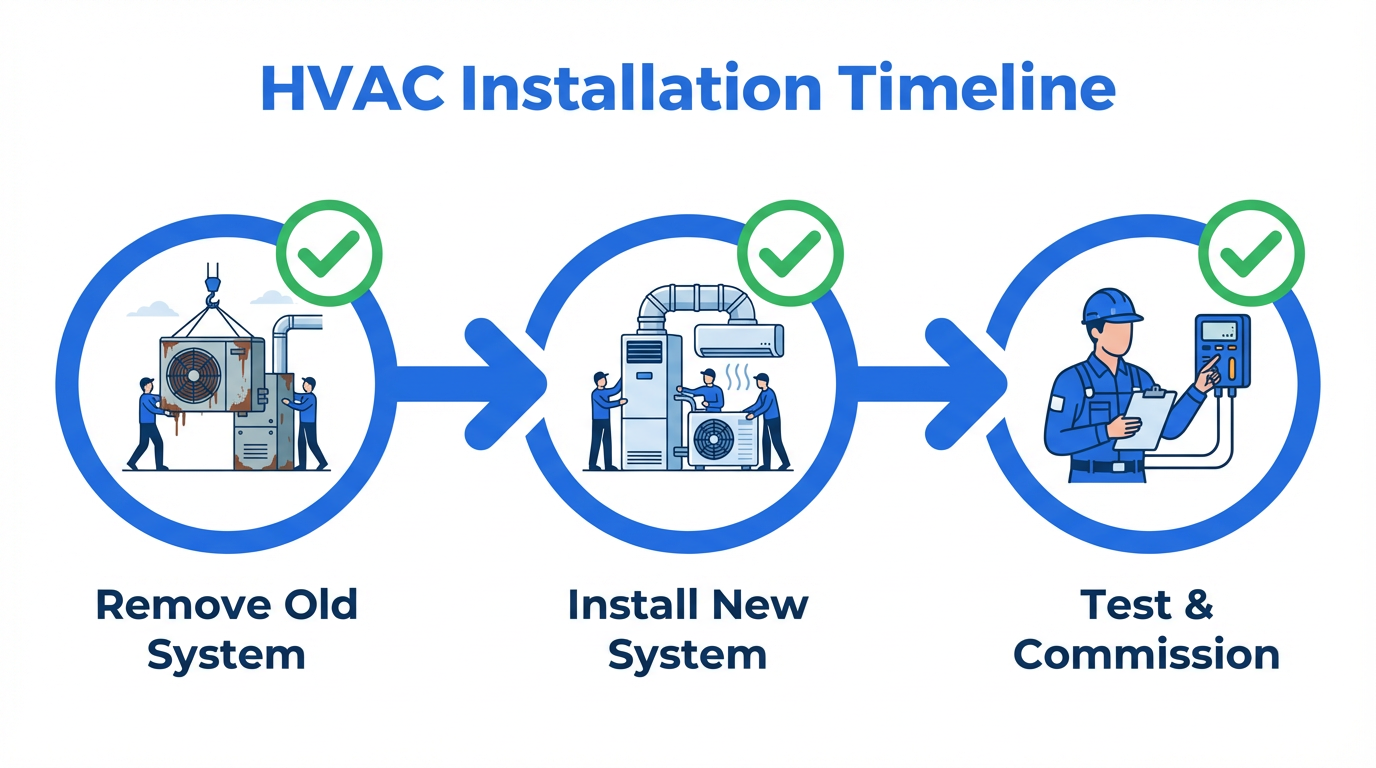
During Installation (Usually 1-3 Days)
Day 1: Old system removal, electrical/ductwork prep
Day 2: New equipment installation, connections
Day 3: Testing, startup, inspection
What to expect:
- Noise and foot traffic
- Brief power/AC outages
- Dust (they should use tarps and clean up)
- Questions from installer about thermostat location, register placement
After Completion
Before final payment:
- Test heating AND cooling modes
- Check airflow from all registers
- Ensure thermostat works properly
- Verify outdoor unit is level and secure
- Get copies of all warranties and manuals
- Confirm permits were pulled and inspections passed
- Get a maintenance schedule and filter replacement guide
Maintenance: Keeping Your System Running Strong
DIY Maintenance (Do These!)
Monthly:
- Replace or clean air filters (every 1-3 months depending on type)
Seasonally:
- Clear debris from outdoor unit (leaves, grass clippings)
- Check thermostat batteries
- Inspect condensate drain line for clogs
Why this matters: Simple maintenance prevents 80% of breakdowns and extends system life by years.
Professional Maintenance (Twice a Year)
Spring (AC prep):
- Refrigerant level check
- Coil cleaning
- Electrical connections inspection
- Capacitor testing
Fall (Heating prep):
- Burner inspection
- Heat exchanger check
- Gas connection safety test
- Airflow measurement
Cost: $100-200 per visit, or $200-300 for annual plans covering both visits.
ROI: Prevents expensive breakdowns, keeps efficiency high, extends equipment life 5-10 years. A $200 tuneup beats a $1,500 emergency repair.
What to Do If Something Goes Wrong
Resolving Disputes
Step 1: Contact the contractor immediately
Most issues are misunderstandings. Give them a chance to fix it.
Step 2: Document everything
Photos, receipts, contracts, text messages—save it all.
Step 3: Escalate if needed
- State licensing board (for licensed contractors)
- BBB complaint (affects their rating)
- Manufacturer (warranty issues)
- Credit card dispute (payment problems)
- Small claims court (under $5,000-10,000)
Step 4: Learn from it
Even good contractors make mistakes. If they fix it professionally, they may be worth a second chance.
You're Ready to Stay Comfortable Year-Round
Hiring an HVAC professional doesn't have to be overwhelming. By checking credentials, understanding pricing, and asking the right questions, you'll find a qualified contractor who will keep your home comfortable for decades. Remember: the lowest price isn't always the best deal, and a properly sized, correctly installed system will save you thousands over its lifetime.
Ready to Find Your HVAC Pro?
Browse trusted heating and cooling professionals in your area. Compare credentials, read reviews from homeowners like you, and get connected with pros who can help.
[Large Button: "Find HVAC Pros Near You" → Links to /browse?category=HVAC]
Frequently Asked Questions
Q: How often should I replace my HVAC system?
A: AC units last 15-20 years with proper maintenance. Furnaces last 18-25 years. If your system is over 15 years old and needs expensive repairs, replacement is usually smarter than fixing.
Q: What SEER rating should I get?
A: Minimum is 14 SEER (federal requirement). 16-18 SEER offers the best balance of cost and efficiency for most homeowners. Above 20 SEER only makes sense if you live somewhere with extreme temperatures and high electricity costs.
Q: Can I install a new thermostat myself?
A: Basic programmable thermostats: usually yes, if you're handy. Smart thermostats: sometimes—check compatibility. Anything involving new wiring or system modifications: hire a pro. Getting it wrong can damage your expensive HVAC equipment.
Q: Do I need to replace both my AC and furnace at the same time?
A: Not always, but it's often smart. They're designed to work together, and replacing both saves on labor costs (one installation instead of two). Plus, financing deals often apply to full system replacements.
Q: How can I lower my energy bills without replacing my system?
A: (1) Replace filters monthly, (2) Get annual maintenance, (3) Use a programmable thermostat, (4) Seal duct leaks, (5) Add insulation to attic. These can cut bills 20-30% without major investment.
Q: What's a Manual J load calculation and do I really need it?
A: It's the industry-standard method for sizing HVAC systems. It factors in your home's size, insulation, windows, climate, and more. YES, you need it. Skipping it means your system will likely be the wrong size, wasting energy and money.
Q: Should I get a maintenance plan?
A: If it's $150-250/year for two annual visits (spring and fall), yes—it's worth it. Plans often include discounts on repairs and priority service. Avoid plans over $300/year unless they include significant extras.
Additional Resources
More Helpful Guides
- Plumbing Services Guide - For water heater issues
External Resources
- Database of State Incentives for Renewables & Efficiency (DSIRE) - Find rebates and tax credits
- Better Business Bureau - Check contractor complaints and verify credentials
Word Count: 3,150 words
Reading Time: 12 minutes
Last Updated: December 27, 2024
Primary Keyword: "how to hire HVAC professional"
Secondary Keywords: "HVAC cost guide", "AC installation cost", "heating and cooling contractor", "SEER rating explained"